

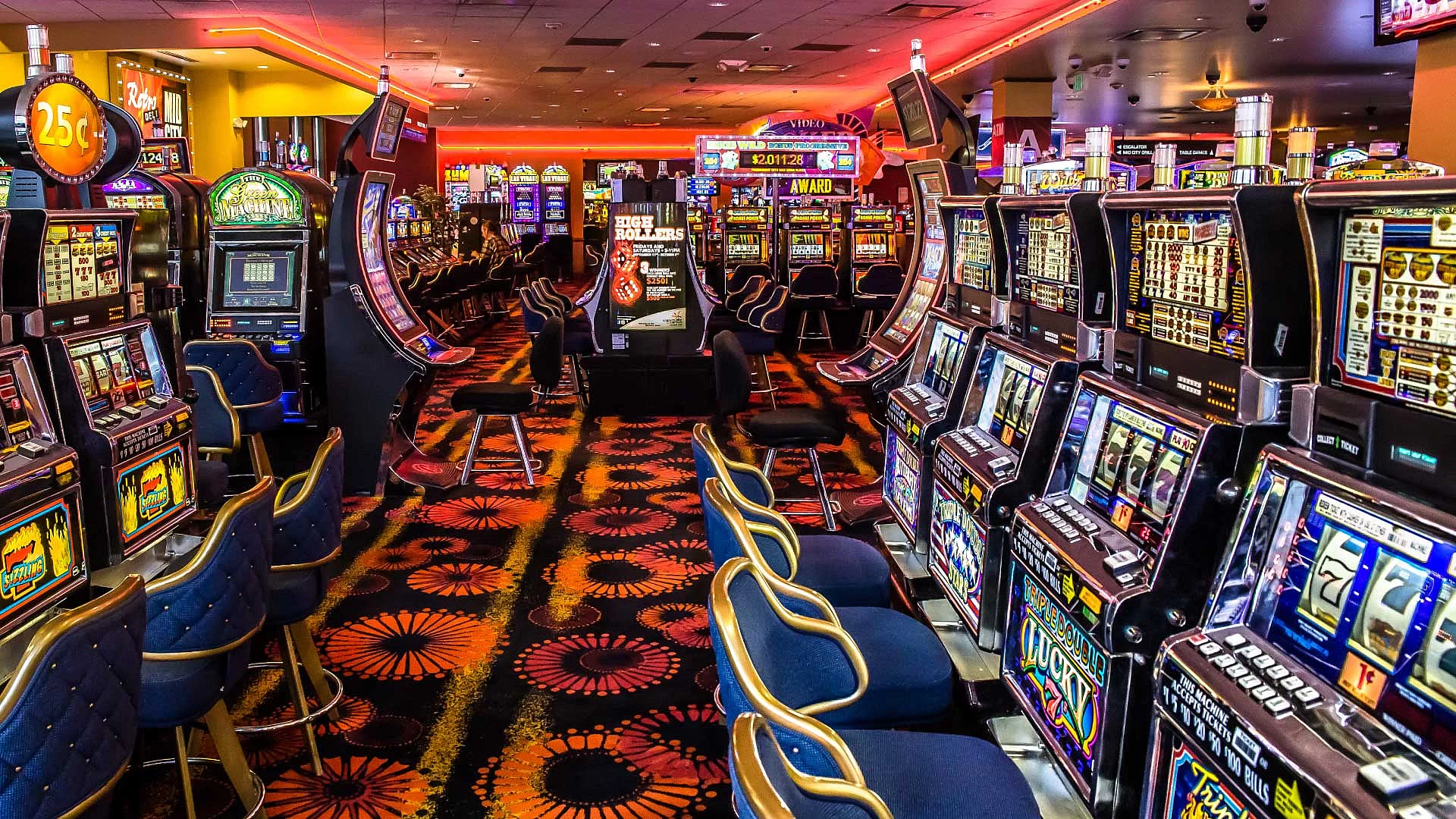
Few casino games evoke as much fascination, excitement, and misunderstanding as the slot machine. From the flashing lights of a brick-and-mortar casino floor to the sleek graphics of digital gaming applications, slots draw millions of players daily. Yet, despite their immense popularity, slot machines remain widely misunderstood. Humans are naturally wired to find patterns, look for meaning, and attempt to predict the future. When confronted with a game governed entirely by probability, this cognitive tendency often gives rise to a massive catalog of urban legends, strategy guides, and complete myths.
To maximize your entertainment and protect your bankroll, you must separate superstition from science. Every single outcome produced by a modern slot machine, whether physical or digital, is dictated by absolute mathematics and strict software architecture. Hitting the spin button triggers an isolated event that has no memory of the past and zero awareness of the future.
The Brain of the Machine: The Random Number Generator
To understand why slot outcomes are completely random, you must look at the underlying technology that powers them. The core component of every modern slot machine is the Random Number Generator, or RNG.
The RNG is a specialized microchip processor that runs a continuous, mathematical algorithm. This algorithm generates long strings of numbers at an incredible speed, usually thousands of random combinations every single second. Each number generated corresponds to a specific combination of symbols on the virtual reels of the slot machine.
The most critical fact to understand about the RNG is that it never rests. It does not wait for a player to pull a lever, insert money, or press the spin button. It calculates vast numeric sequences continuously, 24 hours a day, 365 days a year, whether a machine is sitting empty or actively engaged.
When a player finally pushes the spin button, they are not starting a calculation. Instead, they are simply telling the machine to instantly freeze the numeric sequence at that exact millisecond. The machine reads the value that happened to be active at that precise moment and translates it into the corresponding visual arrangement of symbols on your screen. If you had pressed the button a fraction of a second earlier or later, the algorithm would have moved to a different number, and you would have received a completely different result.
Deconstructing the Most Persistent Slot Myths
Because the internal mechanics of a slot machine are invisible to the eye, players have created dozens of elaborate theories to explain their wins and losses. Evaluating these myths against reality reveals why they are mathematically impossible.
The Myth of Hot and Cold Machines
The most pervasive myth on the casino floor is that slot machines go through distinct hot cycles where they pay out frequently, and cold cycles where they lock up. Players will actively monitor a bank of machines, looking for an individual who has gone an hour without a win, believing that the machine is now due to pay out a large prize.
In reality, slot machines are never due for a payout. Because each spin is an independent statistical event, the history of a machine has zero impact on its future. If a slot machine has gone 500 spins without a single winning combination, the mathematical probability of hitting a jackpot on the 501st spin is exactly the same as it was on the very first spin of the day. The machine does not possess a memory, nor does it keep score of how much money it has taken in or distributed.
The Lever vs The Spin Button Myth
Some players believe that pulling the traditional physical lever on a mechanical-style slot machine gives them a higher chance of winning compared to pressing the digital spin button on the console panel.
This idea is a remnant of the early 20th century, when slot machines relied on complex internal gears, springs, and braking mechanisms to slow physical reels down manually. Today, the lever on a slot machine is simply an electrical switch, functioning exactly like the digital button. Pulling the lever sends an identical electronic signal to the internal microchip micro-circuitry, triggering the exact same RNG process as a gentle tap on the console glass.
The Casino Control Myth
A common conspiracy theory suggests that casino management can alter the payout settings of individual slot machines instantly from a remote backroom office. Players often believe that if a machine is paying out too many jackpots, a technician will press a button to tighten the game, or loosen it during slow periods to attract crowds.
While modern casinos do utilize network-connected systems to track accounting metrics and monitor security, changing the actual Return to Player, or RTP, percentage of a licensed slot machine is an intensely restricted process. In premium regulatory jurisdictions, altering a machine’s mathematics requires physical modifications, software chip replacements, or formal digital updates that must be reported to government gaming commissions. Operators cannot change the fundamental odds of a game on a whim to manipulate an active playing session.
The Mathematics of the House Edge and Return to Player
If slot machines are truly random, you might wonder how casinos guarantee a profit over the long term. The answer lies in the structural design of the game’s payout system, defined by two key metrics: the House Edge and the Return to Player percentage.
The Return to Player percentage represents the theoretical amount of money that a slot machine is mathematically programmed to return to the collective player ecosystem over millions of simulated spins. For example, if a specific slot game features a 95 percent RTP, it means that over a massive, long-term sample size of millions of plays, the game will pay back 95 dollars for every 100 dollars wagered. The remaining 5 dollars represents the house edge, which is the institutional profit margin retained by the casino.
Crucially, the RTP is a long-term macro-statistic, not a short-term guarantee. During an individual playing session consisting of a few hundred spins, a player can experience high volatility. You might double your money in five minutes, or lose your starting budget without hitting a single bonus round. The randomness of the RNG allows for extreme short-term variation, while the underlying mathematical design ensures that the casino hits its target profit margin over the lifespan of the machine.
A Visual Classification of Slot Software Operations
To see exactly how a slot machine processes your action from the moment you approach a game to the final visual payout display, review this step-by-step structural logic flow:
-
Continuous Standby Mode: The internal microchip micro-circuitry runs the RNG algorithm continuously, calculating thousands of random numeric coordinate sets every second.
-
The Input Signal: The player selects their wager size and presses the spin button or pulls the lever interface.
-
Immediate Extraction: The software captures the exact numeric sequence that was active at the precise millisecond of the input signal.
-
Reel Position Translation: The internal program matches the extracted numbers against a static virtual symbol coordinate map.
-
Visual Representation: The physical or virtual reels spin on the screen, slowing down to display the symbols that correspond to the already selected numbers.
-
Balance Adjustment: The system evaluates the final alignment against the paytable, updating the player cash balance instantly if a winning combination is achieved.
Frequently Asked Questions
Does using a player loyalty card lower the payout rate of a slot machine?
No, inserting a player club loyalty card has absolutely no effect on the randomness or performance of a slot machine. The tracking card connects to an isolated accounting network that monitors your total volume of betting activity to award marketing comps, hotel points, or dining rewards. The card system cannot communicate with the core RNG algorithm, which remains entirely separate to ensure regulatory compliance.
Can the temperature of a physical slot machine indicate if it is about to pay out?
No, the physical temperature of a slot cabinet is entirely related to its internal electronics, cooling fans, and display backlights. A machine that feels warm to the touch has simply been running its computer systems for a prolonged period or has a minor dust buildup in its ventilation ducts. It carries no statistical connection to the performance of the software algorithm inside the processor.
Why do slot machines sometimes stop spinning instantly before showing a loss?
This phenomenon is known as a near-miss sequence or an intentional stop design. Modern video slots are programmed to display outcomes dynamically. While the RNG determines the exact final stop positions instantly the moment you hit spin, the visual reels are designed to create theatrical suspense. Occasional near-miss displays are purely entertainment features designed to enhance excitement.
Does playing a slot machine immediately after someone else wins a jackpot decrease my odds?
No, your odds remain completely identical. Because the RNG chip continues to cycle through thousands of brand-new numerical combinations every second, the previous jackpot payout is completely erased from the operational loop. The machine does not require a cooling-off period to recover funds, and it is entirely possible to hit two consecutive jackpots back-to-back if you hit the button at the exact necessary milliseconds.
Does the duration of time I hold down the spin button affect the random outcome?
No, holding the button down or pressing it with varying force has no impact on the result. The spin button acts as a simple, binary digital trigger. The moment the internal electronic contact is closed, the system registers the action and freezes the numerical sequence instantly. Any additional pressure, holding time, or secondary tapping does not alter the core processing data.
Are digital online slot games less random than physical machines in a casino?
No, online slot games operate under the exact same structural frameworks as physical electronic casino cabinets. Reputable digital slot games are hosted on secure remote game servers managed by certified software developers, rather than the online casino platform itself. These remote servers undergo rigorous monthly testing by independent regulatory laboratories to verify complete statistical randomness.
What is the purpose of the stop button feature found on some slot models?
Many modern slot machines feature a secondary button that allows players to halt the reel animations prematurely. This feature does not alter the mathematical outcome of the spin in any way. Because the RNG chip already selected the final resting symbols the exact millisecond you initiated the game, pressing the stop button simply cuts the visual animation short, displaying the predetermined result faster without changing the odds.